
In a rapidly changing marketplace, one of the clearest indicators of industry vitality lies in the purchase intentions of Canadian car shoppers. These intentions provide a view of consumer sentiment, serving as a critical tool for dealerships and automakers looking to stay ahead. While market fluctuations are a reality, trends reveal an adaptive consumer base providing a certain level of optimism in the Canadian automotive landscape.
Newsroom Articles

Article
September 25, 2025
-
6 Minute Read
Understanding Canadian Car Shopper Purchase Intentions in Q3 2025
Intention to Buy a Vehicle Over Time
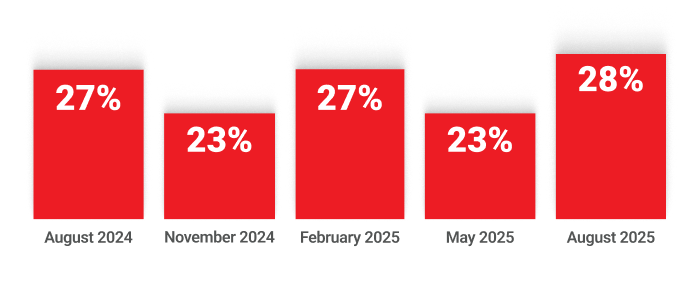
Vehicle purchase intention among prospective buyers has shown significant fluctuations in the back half of Q3, particularly for new vehicle intenders, with a slight dip in May followed by a rebound to 28% in August 2025. Overall intentions are similar to levels noted in Q3 of the previous year.
These fluctuations reflect the market’s sensitivity to economic shifts and the consistent engagement of consumers in the car shopping process. Tracking these shifts helps dealerships tailor offerings that meet emerging demands and strengthen market positioning to help drive long-term growth.

Confidence Holds Steady: A Sign of Stability
Encouragingly, consumer confidence in personal finance and the broader economy has remained stable from Q1 to Q3 2025, with 62% of respondents believing the economy will hold or improve in the next six months and 83% reporting confidence that their personal financial situation will also hold or improve. Despite the macroeconomic headwinds, Canadians remain optimistic about their financial well-being over the next six months. This stability provides a strong foundation for ongoing engagement in the vehicle purchase process and suggests that buyers are not pulling back out of fear, but rather adjusting their approach to buying with more care and precision.
Tariffs Spark Awareness, Not Alarm
Concerns about tariffs have emerged as a notable influence on purchase decisions, with 7 in 10 consumers acknowledging they influenced purchase decisions. Earlier in the year, 36% of car shoppers affected by tariffs were considering Canadian-made vehicles more heavily. However, our most recent study shows that this trend appears to have subsided, dropping to 23%. These consumers are spending more time-price comparison shopping (33%), reducing their budget (31%), and delaying vehicle purchase (33%). These behaviours reinforce the need to provide transparent and detailed information that instills trust and confidence.


Digital-First Decisions
One of the most promising trends continues to be the strong embrace of digital tools in the car shopping journey, with 82% of respondents reporting to have used online sources for information. For used car shoppers, online automotive marketplaces (50%), dealership websites (40%), and manufacturer websites (40%) remain the leading sources consumers seek vehicle information. What’s more, 9 in 10 consumers are interested in completing at least part of their vehicle purchase online, while 6 in 10 are open to completing their entire shopping journey online.
This continued preference for digital engagement highlights the importance of well-structured online experiences. Dealerships that invest in seamless digital platforms, accurate inventory listings, and responsive customer service will find themselves well-positioned to meet consumer expectations.
Financing Flexibility & Informed Choices
Canadian used car buyers intending to finance their purchase are split between choosing to finance a vehicle purchase directly through a dealership (35%) or a financial institution of their choice (50%). The divide for new car shoppers is similar, with 34% intending to take out a loan from a dealership, while 50% report a preference for a loan from a financial institution. Consumers value options and transparency throughout the decision process as these results show, a desire for flexibility and the importance of competitive offerings.

Looking Ahead
While challenges such as market volatility and tariff uncertainty remain, the overall outlook for Canada’s automotive industry is positive. Car shopper purchase intentions reveal a thoughtful, engaged buyer who remains confident in their financial outlook and willingness to adapt to new economic conditions.
For dealerships, the message is clear: staying closely aligned with consumer preferences, offering flexible financing solutions, and investing in digital capabilities are paramount to long-term success. By monitoring consumer sentiment and purchase intentions, automotive dealerships can navigate today’s market conditions with clarity and steer toward a more resilient, consumer-centric future.
Key Takeaways
- Consumer engagement in the market holds steady.
- Confidence in personal finances and the economy is stable through Q3 2025.
- Buyers are spending more time researching and comparing vehicles.
- Digital engagement remains the preferred method for car shopping.
- Consumers are evenly split between financing through dealerships and financial institutions, showing a desire for choice and competitive options.
- Staying in tune with consumer behaviour and enhancing digital capabilities are key to maintaining a competitive edge.
Source: Vehicle Purchase intentions Research Study, DIG Insights, August 2025, (n= 1,675).

Infographic: Car Shopper Purchase Intentions
Download a copy of our latest Car Shopper Purchase Intentions infographic below.

About the author:
Milan Brankovic
Director, B2B Marketing
TRADER
Additional content you may be interested in
-

AutoTrader Unveils Its Most Significant Transformation to Date
Canada’s leading automotive marketplace to launch a next-generation AI-powered platform...
-

2026 AutoTrader Awards Reveal the Best Vehicles to Buy in Canada
TORONTO, ON - February 12, 2026 — AutoTrader today announced...
-
AutoTrader Price Index: Q4 2025
Our latest AutoTrader Price Index highlights a steady close to...
-

Affordability Takes the Wheel in Canadians' 2025 Vehicle Choices
AutoTrader's 2025 Top Vehicles data reveals Canadians favouring practical, value-driven...
-

AutoTrader Price Index: Q3 2025
The Canadian automotive market held steady through Q3 2025, as...
-

Online Automotive Marketplaces Pivotal in the Car Shopping Journey, Clarivoy Study Confirms
Summary New methods of tracking consumer shopping data in real-time...
-

AutoTrader Carology Bitesize: Price Index Q2 2025
Get the inside scoop on supply, demand and price, from...
-

AutoTrader Price Index: Q2 2025
The Canadian automotive market demonstrated resilience in Q2 2025, with...

