Newsroom Articles

Understanding how Canadians shop for cars can help your dealership provide the right support at the right time. AutoTrader’s 2026 Path to Purchase study explores how Canadian car shoppers research, compare and choose their next vehicle, revealing what matters most and where they need guidance.

The study, conducted in August 2026, looked at Canadians who purchased a vehicle in the past 6 months and consumers who intend to purchase in the next 6 months, making these findings very timely. With many changes both in the automotive market and economy, respondents were asked additional questions about their current AI usage throughout the journey and the impact ongoing tariffs with the US have had on vehicle purchases. Let’s unpack how these insights can help you address purchase barriers, build confidence and turn shopper interest into sales.
Triggers to Purchase

Vehicle ownership is a reality for many, with 72% of purchasers saying the vehicle they drive feels like a part of their daily routine, while 66% would miss their vehicle if they no longer had it. At the same time, purchasers struggle with high vehicle prices and ownership costs. Ongoing trade tensions and employment struggles add to these pressures and impact purchase decisions.

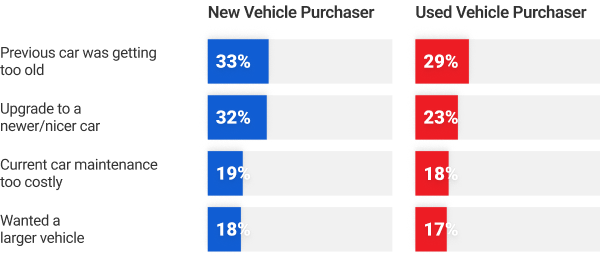
The results reflect this reality. Shoppers are making a purchase because they “have to” more often than because they “want to”. The desire to simply upgrade to a newer, nicer vehicle has decreased since the last time this study was conducted in 2024. Among used car shoppers, the top trigger to purchase is that their previous car was getting too old (29%), closely followed by their previous car breaking down (25%, up 8 percentage points since 2024) and the desire to upgrade to something newer (23%). For new car shoppers, the top trigger is that their car was getting too old (33%), while their desire to upgrade has decreased 7 percentage points since 2024 to 32%. Costly maintenance on their current car trails behind (19%).

Recommendation for Dealers

When shoppers need to replace an aging or broken-down vehicle, focus on what solves their immediate problem: reliable transportation, manageable payments and confidence in what they’re buying. Understand their urgency, knowing some new vehicles may take time to be delivered, and make logical recommendations. With used car shoppers, highlight inspection results, vehicle history, warranty coverage and expected maintenance needs to help provide that layer of confidence.

Resources Used Throughout the Car Shopping Journey

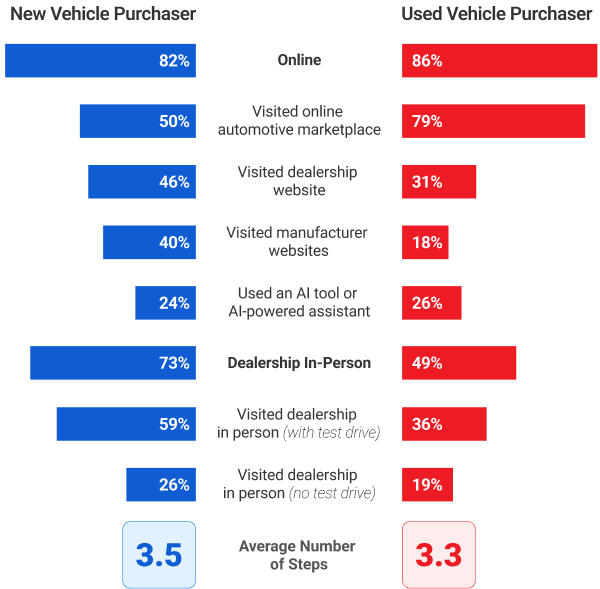
The car purchase journey takes time, on average 3 months, as shoppers do their research and feel confident with their decision. As with previous waves, online resources are the most widely used. The most popular online channels are automotive marketplaces (79% used, 50% new), dealership websites (31% used, 46% new), and manufacturer websites (18% used, 40% new). About 25% of both new and used shoppers are intentionally leveraging AI tools or assistants during their process.

Recommendation for Dealers

Build a strong presence where car shoppers are researching, particularly on automotive marketplaces and your dealership website. Keep pricing, availability and vehicle details accurate and consistent across channels, with quality photos and clear descriptions that help shoppers compare their options. As AI becomes part of their research, be prepared to answer detailed questions and validate information they bring to the conversation.

Support Car Shoppers During Difficult Stages of Their Journey

Shoppers identified three of the most difficult parts of the car buying journey: trusting that they’re getting a fair price for both their trade-in and their purchase, understanding costs and payment options, and deciding on vehicle options such as type, size, trim and powertrain.

There is a range of tools and techniques your dealership can leverage to support shoppers throughout these stages, ultimately helping you build more trust:

  • Leverage a third-party trade-in valuation tool, such as Instant Cash Offer (ICO)
  • Offer price comparison functionality on your dealership website
  • Explain all finance and lease options with transparency
  • Respond promptly when shoppers are ready to act

Tariff Impact on Car Shopping

Fifty-eight percent of buyers agree that tariffs and trade policies had an impact on when they purchased and which vehicle they chose. The top impact among all shoppers was spending more time comparing vehicle prices (29% new, 32% used). Other impacts among new shoppers include considering a hybrid or EV instead (27%), increasing their budget (24%), reducing their budget (22%), reconsidering buying a vehicle made in the US (21%), or compromising on the brand, model or trim (21%). Among used shoppers, other impacts include switching from new to used (29%), purchasing a smaller vehicle (25%), reducing their budget (22%), or travelling further to find a vehicle that fits their budget or needs (22%).

Recommendation for Dealers

Market uncertainty is affecting many shoppers’ budgets, timing or vehicle preferences, and shoppers may pivot as things change. Help them compare options across new and used inventory, price points and powertrains, clearly explaining the trade-offs around purchase price and long-term ownership costs. Highlight vehicles that meet their priorities and provide transparent pricing to help them make an informed decision without adding pressure. Ensure your marketing radius is wide enough to attract customers who may be willing to travel further for the right vehicle.

Price Leads the Decision-Making; Other Aspects Can Help Close the Deal

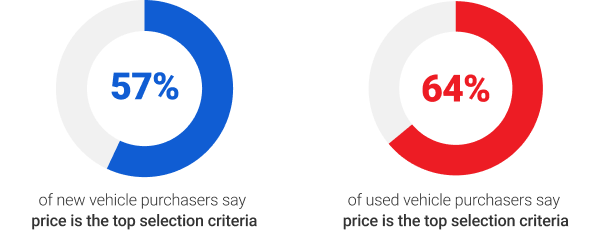
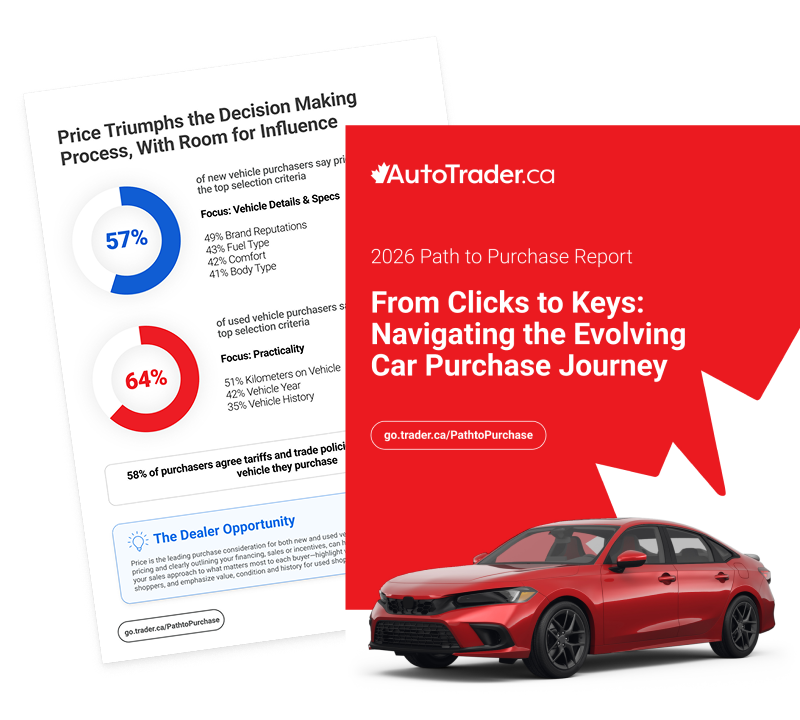
Fifty-seven percent of new and sixty-four percent of used vehicle purchasers say price is the top selection criterion. For new car shoppers, details such as brand reputation (49%), fuel type (43%), comfort (42%), and body type (41%) influence purchase decisions. On the used side, practicality is the focus, with kilometres on the vehicle (51%), model year (42%), and vehicle history (35%) driving that final decision. Payment flexibility and clear guidance can help dealers address shoppers’ affordability concerns and purchase uncertainty. Half of new vehicle intenders and 47% of used vehicle intenders plan to finance, while 38% and 43%, respectively, intend to pay cash.

Most shoppers ultimately purchase something different from what they originally intended (69% of new, 79% of used). Budget is one reason plans shift. New vehicle shoppers changed their choice of powertrain (22%), purchased a different make (21%) or selected a different trim level (17%). Used shoppers who purchased something else got a different make than originally intended (20%), a different powertrain (17%) or a used car instead of a new one (16%).

Recommendation for Dealers

Lead with competitive pricing, then highlight the vehicle details that matter most to each buyer depending on their wants and needs. Understand payment preferences early but be flexible as plans often change. Communicate financing options transparently and offer relevant vehicles across price points.

AI is Prevalent Throughout the Shopping Journey

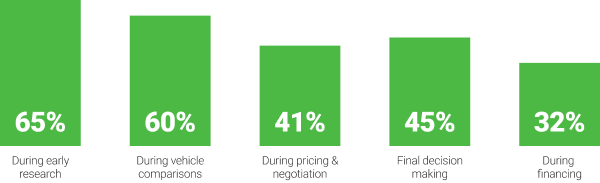
One-quarter of car shoppers intentionally use AI. Among these consumers, AI is most often used during the early research stage (65%) and while comparing vehicles (60%). AI helps them learn about the market and build a shortlist of vehicles to consider. Shoppers also use AI for pricing and negotiation (41%), financing (32%), and making a final purchase decision (45%). Later in the journey, AI helps shoppers estimate what they might get for their trade-in and what they might pay for their next vehicle, helping them structure the deal.

Shoppers visit two dealerships on average, and AI is changing where they turn for help along the way. Shoppers still rely on dealers to confirm prices, fees and incentives (52%), arrange a test drive (47%), understand warranty, service or maintenance considerations (43%), confirm vehicle availability (41%), and assess the vehicle condition or history (38%).

Recommendation for Dealers

Start building relationships with consumers early in their journey so you can earn their trust and maintain it through the purchase. Be prepared to meet shoppers who are more informed. Test AI tools yourself to understand what information they provide and better equip your team to respond to a shopper’s questions.

With consumers visiting so few dealerships, every visit is an important opportunity to earn their business. Give shoppers the support they’re looking for and expect them to arrive with more research already done.

Car Shoppers Are Interested in Maintaining Communication Post-Purchase

The customer relationship shouldn’t end when a vehicle leaves the lot. Eighty-eight percent of new vehicle purchasers and 75% of used vehicle purchasers want some type of post-purchase communication. Service and maintenance reminders are the top preference for both groups, at 52% and 41%, respectively. New vehicle purchasers also value ownership support (48%), while used vehicle purchasers show interest in specials on service, maintenance and parts (36%).

Understanding what drives today’s car shoppers can help your dealership make more informed decisions about how you market inventory, support customers and close sales. From purchase motivations and affordability concerns to AI usage and post-purchase expectations, these insights reveal opportunities to build trust at every stage of the journey.

Recommendation for Dealers

Build a follow-up strategy tailored to each customer’s vehicle and ownership needs. Relevant reminders, helpful advice and timely offers can keep your dealership top of mind, encourage service visits and build relationships that support repeat business.

Understanding what drives today’s car shoppers can help your dealership make more informed decisions about how you market inventory, support customers and close sales. From purchase motivations and affordability concerns to AI usage and post-purchase expectations, these insights reveal opportunities to build trust at every stage of the journey.

Download AutoTrader’s 2026 Path to Purchase Report

Explore the findings and discover how your dealership can turn shopper insights into action.