Newsroom Articles

With recent government incentives for Electric Vehicles (EVs) and rising gas prices, understanding how Canadian car shoppers feel about EVs – and their intent to purchase one – has never been more important. In our latest consumer research, we surveyed over 1,700 EV owners, purchase intenders, and non-intenders to capture a comprehensive view of sentiment for this specific vehicle type across the country.

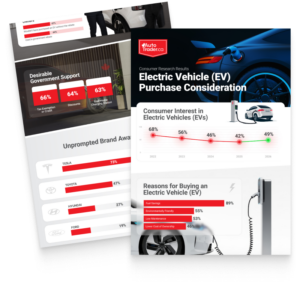
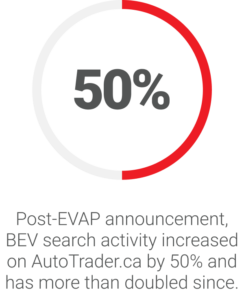
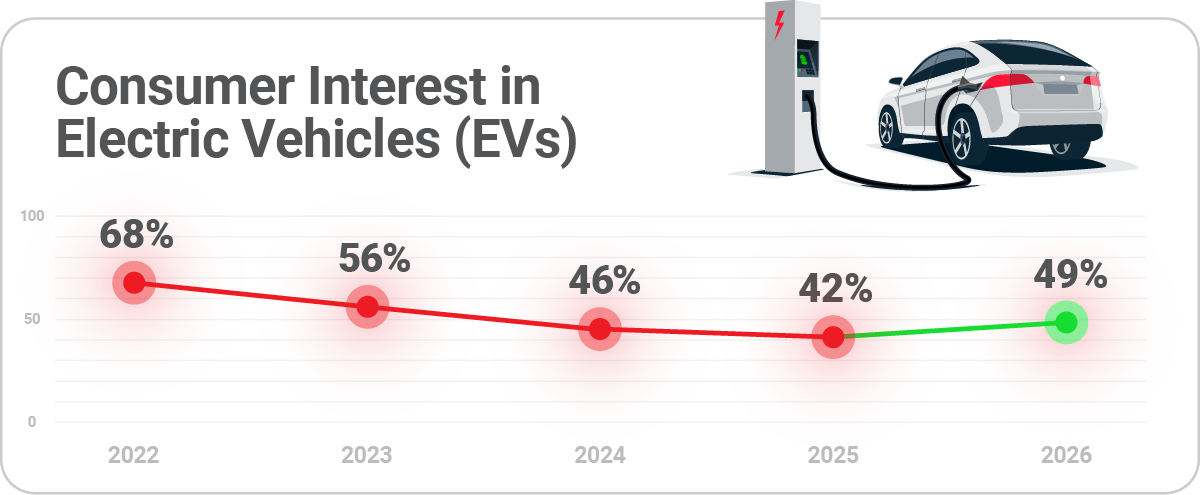
For context, this research was launched shortly after the federal government’s February 5th announcement of the Electric Vehicle Affordability Program (EVAP). Results show that 49% of consumers would consider purchasing an EV, marking the first increase in purchase consideration since the annual study began in 2022. While this shift cannot be attributed solely to the announcement, additional findings suggest that increased government support is positively influencing purchase intent – further reflected in a rise in EV searches on AutoTrader.ca.
Factors Influencing & De-Influencing EV Purchases

Unsurprisingly, fuel savings (89%) and environmental benefits (55%) remain the leading reasons car shoppers would consider purchasing an EV. Additional factors, such as low maintenance (53%) and lower total cost of ownership over time (46%), also play a significant role in influencing consideration. Almost half of EV owners indicated that the total cost of ownership has been lower than expected, with the most significant savings coming from fuel or charging costs (82%) and reduced maintenance needs (65%). Conversely, among those not considering an EV, key barriers include limited driving range (78%), insufficient charging infrastructure (67%), and higher upfront purchase cost (64%).

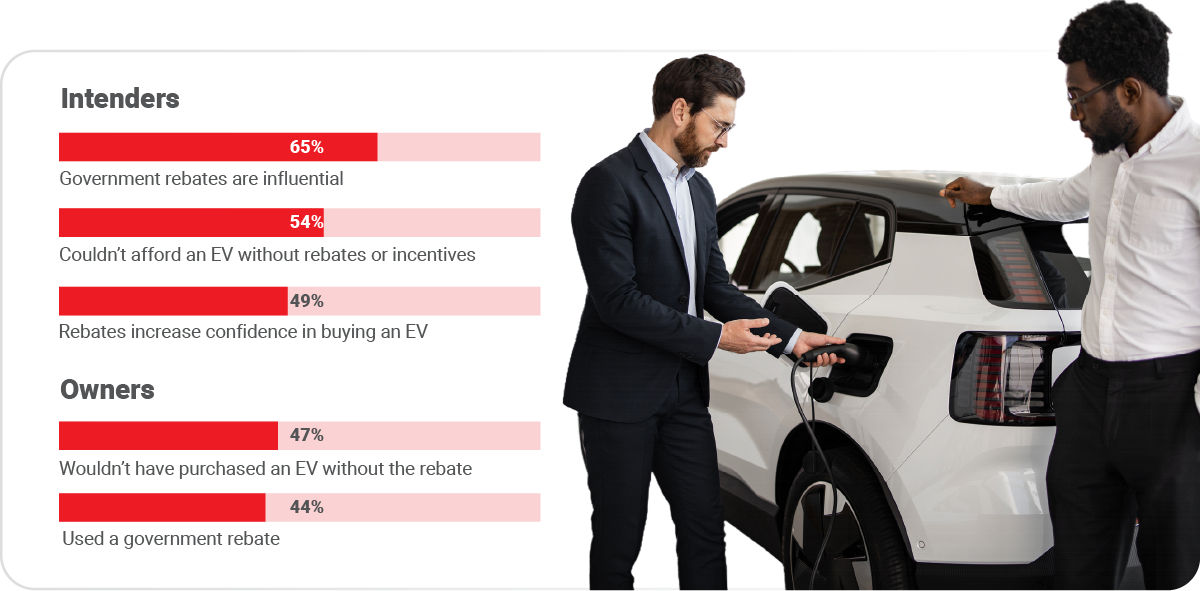
Rebates play a strong role among consumers open to purchasing an EV, 65% claim that government rebates would influence their decision. Additionally, 54% indicate they could not afford an EV without rebates or incentives, while 49% report that these incentives increase their confidence in making a purchase – consistent with findings from the previous wave of this study. Current EV owners also place strong importance on rebates. Among those surveyed, 44% reported using a government incentive, and nearly half (47%) said they would not have made the purchase without it.

Hybrids remain the most considered option among EV intenders (66%), followed closely by plug-in hybrid vehicles (61%), with battery electric vehicles also garnering significant interest (47%).

Tips

  • Focus conversations with EV shoppers on the long-term benefits of ownership.
  • Don’t just tell – show! Use side-by-side comparisons to highlight potential fuel savings.
  • Help shoppers understand lower maintenance needs, including no oil changes and fewer moving parts – cost savings that can help offset a higher upfront price.
  • Take the time to understand each shopper’s driving habits. If range is a concern, break it down into practical, everyday usage.
  • Tailor the conversation to their daily commute to illustrate how many days they can drive before needing to plug-in.
  • If charging is a concern, discuss nearby available infrastructure or options for installing a home charger.
  • With more vehicles now offered as hybrid-only, ensure customers understand how the technology works, including its inherent benefits, as well as the potential for long-term savings to support informed decision-making.

Government Support Plays a Key Role in Driving EV Adoption

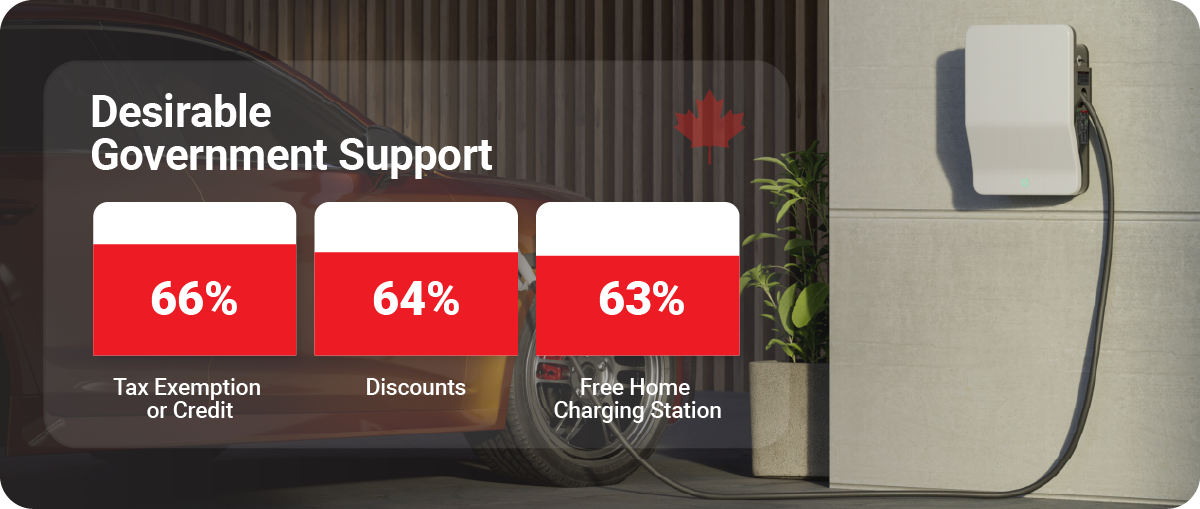
Among EV purchase intenders, 75% say increased government investment in charging infrastructure across Canada would influence their decision, while 71% indicate that rebates would have an impact. Additional desired forms of government support are also highly valued, including tax exemptions or credits (66%), discounts (64%), and complimentary home charging stations (63%) – all of which help address both upfront and ongoing costs.

Tips

  • Sixty-six percent of intenders were aware of the Electric Vehicle Affordability Program (EVAP), infrastructure, and sales mandates announced in February. Your shoppers may not be fully aware of the policy announcement, moreover, the available government rebates or incentives and how they could benefit.
  • Consider implementing a strategy to address home charging barriers by partnering with a local provider that can offer discounted installation for customers who purchase through your dealership.

EV Brands Making Headway in Canada

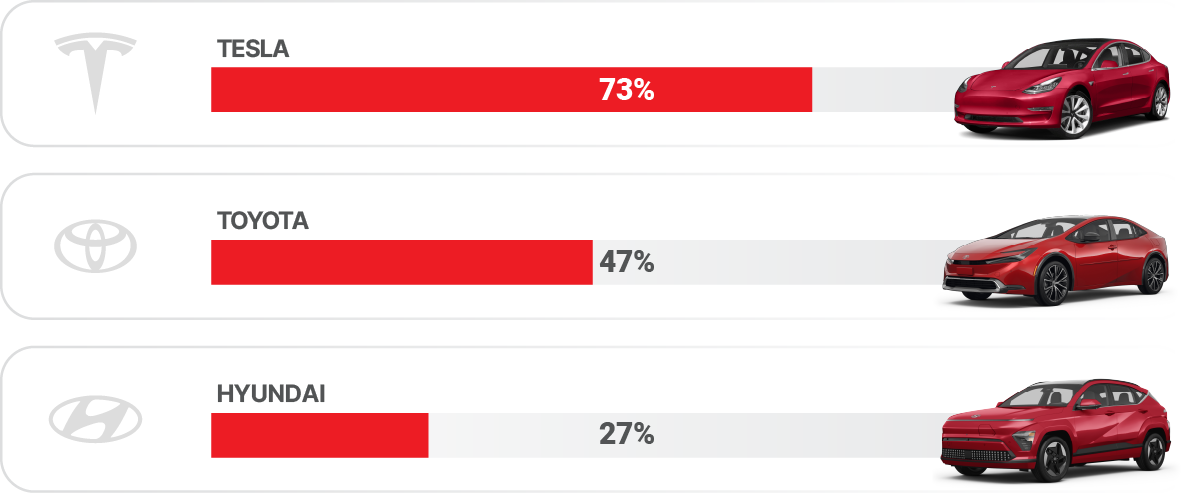
When asked, unprompted, the EV brands that are top of mind, 73% of intenders named Tesla, followed by Toyota (47%) and Hyundai (27%). Notably, BYD, (“Build Your Dreams”, a major Chinese multinational manufacturer of EVs and hybrids), has already established a baseline level of awareness in Canada despite not yet being available in the market. Brand familiarity plays a significant role in purchase consideration, with 79% of intenders indicating they are influenced by brands they know and trust, most notably Toyota and Hyundai.

Looking more closely at global brands entering the Canadian market, 75% of EV intenders believe that the availability of lower-priced vehicles from international brands would improve affordability. At the same time, 44% express a preference for EVs manufactured in Canada, with only 20% indicating they would only consider Canadian-made options – even at a higher price point. Despite this, openness to international EV manufacturers remains notable, with 53% of intenders saying they would consider purchasing from a Chinese manufacturer, while 58% stating they would be willing to purchase from a recognized Chinese producer.

Tips

  • Lean into the trust factor when presenting your brand to potential buyers. Outline any warranties as well as local parts availability and service offerings, that set your brand apart from others, (particularly international entrants).
  • Identify pros and cons for buyers who may be interested in new brands coming to the Canadian market.
  • If applicable, lean into models built in Canada, as these offerings can be a significant driver of trust and confidence.

Key Takeaways

  • Price remains a primary driver in EV purchase consideration.
  • Charging infrastructure and government incentives are critical to accelerating adoption.
  • While Chinese brands are gaining recognition, many consumers still prefer reputable brands they know and trust.
  • There is a prevailing need for greater consumer education around EV ownership and available incentives.
  • Although environmental benefits are important, higher upfront costs remain a fundamental barrier.
  • Equip your sales personnel with competitive messaging to confidently address questions around emergent international EV brands.

Source: AutoTrader Electric Vehicle Research Study, February-March 2026, (n=1,761).

Infographic: Q1 2026 Electric Vehicle (EV) Study

Download a copy of our Q1 2026 Electric Vehicle Research Study infographic.